Skip to content
Synapse Horizon

Energy Storage

Battery Energy Storage Systems (BESS) for the UAE & GCC

Lithium iron phosphate (LFP) storage from containerized utility blocks to wall-mounted home batteries — built for 50 °C ambient, peak shaving, solar shifting and backup power.

Chemistry
LFP
Cycle life
6,000+ (typical)
Formats
5 kWh – multi-MWh
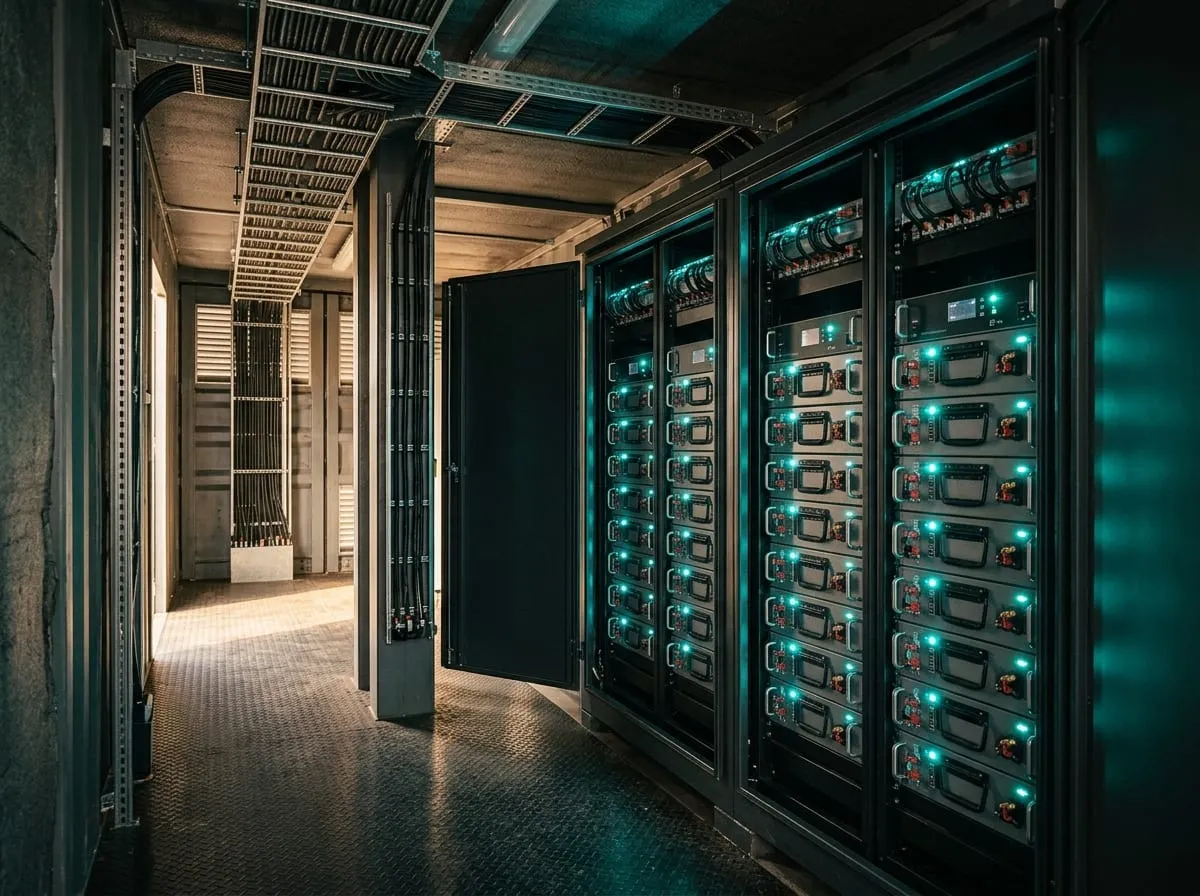
Open battery storage cabinet with neatly racked LFP modules and teal indicator lights

What we supply

Energy Storage product groups

Wholesale supply in project and container volumes. Tell us your specification and we source to it.

Utility-scale BESS

Containerized LFP blocks for grid services, solar firming and energy arbitrage.

  • Multi-MWh 20-ft container blocks with integrated liquid thermal management
  • Grid-forming and grid-following PCS options
  • Fire detection and suppression designed to NFPA 855 / UL 9540A test data
  • 6,000+ cycle LFP cells (at stated depth of discharge)
Quote this: Utility-scale BESS

C&I energy storage cabinets

Outdoor cabinets for factories, malls, cold stores and telecom sites.

  • 100–500 kWh per cabinet, scalable in parallel
  • Peak shaving, demand-charge reduction and PV self-consumption modes
  • IP55 enclosures with air-conditioning rated for desert climates
  • EMS integration via Modbus TCP
Quote this: C&I energy storage cabinets

Home & off-grid batteries

Wall- or floor-mounted LFP systems for villas, farms and remote sites.

  • 5–30 kWh modular stacks
  • Hybrid-inverter compatible, backup in <20 ms
  • Off-grid kits with PV and generator integration
  • 10-year performance warranties from Tier-1 manufacturers
Quote this: Home & off-grid batteries

Applications

Where it is used

01

Peak shaving

Where a tariff includes demand charges or time-of-use rates, a battery discharges during the site’s highest-load hours and recharges when demand is low. The energy management system follows a load threshold you set, so savings depend on your actual load profile. Sizing works best from 12 months of interval meter data where it is available.

02

Solar self-consumption

Midday solar output often exceeds what a building uses, especially at weekends. Storage captures that surplus and releases it in the evening, raising the share of solar you consume on site. This helps where export credits are limited or where the grid connection caps how much a PV system can feed back.

03

Backup for critical loads

Cold stores, clinics, telecom shelters and server rooms cannot tolerate outages. A battery with a hybrid inverter or a dedicated PCS keeps critical circuits running and can take over within milliseconds, so it can reduce generator run hours or complement an existing UPS. Backup duration comes from the protected load and the usable kilowatt-hours.

04

Microgrids and remote sites

Farms, mining camps and remote infrastructure often run on diesel. Combining PV, LFP storage and a controller lets generators run less often and at a steadier load, which reduces fuel use and maintenance. Grid-forming inverters can hold voltage and frequency on their own, so the site keeps power when the generator is off.

Why Synapse Horizon

Supplied by us, delivered with our partners

Tier-1 sourcing

LFP cells, racks and PCS sourced from Tier-1 manufacturers and authorised channels, with the manufacturer warranty applying.

Documentation and certification support

UL 9540A test reports, IEC 62619 and UN 38.3 certificates and datasheets packaged for utility and civil-defence review.

Logistics coordinated from Dubai

Shipments can be consolidated in Dubai and delivered by road or sea across the UAE, Saudi Arabia, Oman, Qatar, Kuwait and Bahrain, and onward to wider MENA.

Partner engineering and installation

Our engineering, EPC and installation partners handle design, utility submissions, installation and commissioning, so you get one accountable path from quote to energisation.

FAQ

Energy Storage questions

Why LFP rather than NMC in Gulf heat?
Lithium iron phosphate has a higher thermal-runaway onset temperature than nickel-based chemistries, and it releases far less oxygen if a cell fails. It also offers long cycle life and uses no cobalt. It is less energy-dense than NMC, but for stationary storage in 45–50 °C ambient conditions, stability and lifetime matter far more than weight.
How do I size kWh versus kW?
Power (kW) is how fast the battery can charge or discharge, and energy (kWh) is how long it can sustain that output. Peak shaving usually needs high power for one to two hours. Solar shifting and backup need more energy. Start from interval load data and the goal, then let our partners model the ratio.
What cycle life and warranty should I expect?
Tier-1 LFP systems typically state 6,000 or more cycles at a defined depth of discharge and temperature, with warranties that guarantee a minimum retained capacity after a set number of years or throughput. Read the warranty conditions closely, because operating temperature, C-rate and cycles per day all affect whether the guarantee holds.
What approvals are needed in Dubai and Abu Dhabi?
Grid-connected storage needs utility approval before connection. That means DEWA in Dubai, and ADDC or AADC under Department of Energy rules in Abu Dhabi. Civil defence reviews fire safety for battery rooms and enclosures. We can supply UL 9540A reports and certificates on request, and your consultant or our partner makes the submissions.
Can batteries sit outdoors in 50 °C summers?
Yes, if the enclosure is designed for it. Outdoor cabinets and containers use air-conditioning or liquid thermal management to keep cells near their ideal temperature, because heat speeds up ageing. Check the rated ambient range, the auxiliary power the cooling consumes, and the IP rating for dust. Shading and good ventilation clearances also help.

Request a quote

Request a quote for Energy Storage

Share quantities, specifications, delivery location and timeline. No obligation, and we reply within one business day.